Problems to describe
- water collecting near a grate or inlet after rain
- debris blocking a private drainage feature
- runoff reaching an area it normally does not
Stormwater features can sit across property boundaries. Identify the grate, inlet, channel, or collection point before assuming responsibility.
Use this path for outdoor drainage features on private property where water collects, flows slowly, or backs up.
Include the feature location, weather context, property boundary, safe access, and where water is collecting.
Call with the detailsWeather, collection point, runoff direction, grate condition, property boundary, safe access, and public-versus-private responsibility can change what should be confirmed.
Stormwater problems are easier to describe when the feature and runoff path are named. A blocked private grate is a different question from water moving along a public roadway.
Outdoor water is shaped by the feature, rainfall, grade, and property boundary. Naming the grate or inlet keeps a stormwater question from becoming a vague flooding claim.
The feature, water path, and boundary should be identified before a storm-drain method is selected.
Photograph the feature if it is safe, note the weather and water path, and identify whether the grate, channel, or basin is on private property.
Observe the feature only when safe. Note the weather, where water starts, where it stops, and whether debris is blocking the inlet or channel.
These paths help when sediment, a catch basin, a low indoor drain, or a commercial site feature may be part of the same water movement.
Private storm drain cleaning in Bellevue and outdoor drain cleaning questions often follow a storm drain clogged after rain, water pooling around a storm drain, or a private stormwater inlet that needs attention.
People may describe the need as storm drain cleaning Bellevue WA, private storm drain cleaning Bellevue, and outdoor drain cleaning Bellevue. More specific questions include storm drain clogged after rain Bellevue, water pooling around storm drain Bellevue, and private stormwater inlet cleaning Bellevue. The fixture, timing, recurrence, access, and property context should guide the request.
Call when a private storm drain, channel, or inlet holds water after rain, receives unusual debris, or sends runoff toward an area it normally avoids. Use the feature location and weather timing for storm drain cleaning intent.
A professional can identify the grate, inlet, private pipe run, access point, and possible property-boundary issue before discussing stormwater service. Outdoor drainage symptoms can involve cleaning, obstruction, grading, or responsibility questions.
Keep clear of moving water, do not enter a basin, and remove only loose surface debris that is safe to reach. Photograph the feature and water path rather than pushing debris deeper into the storm drain pipe.
Keep grates and surface inlets clear of leaves, watch how water moves during rain, and note recurring ponding locations. Seasonal observations help target storm drain maintenance and show whether the issue is at the inlet, private line, or downstream connection.
These views match the kind of fixture, line, outdoor feature, or operating context that can change the first conversation for storm drain cleaning.
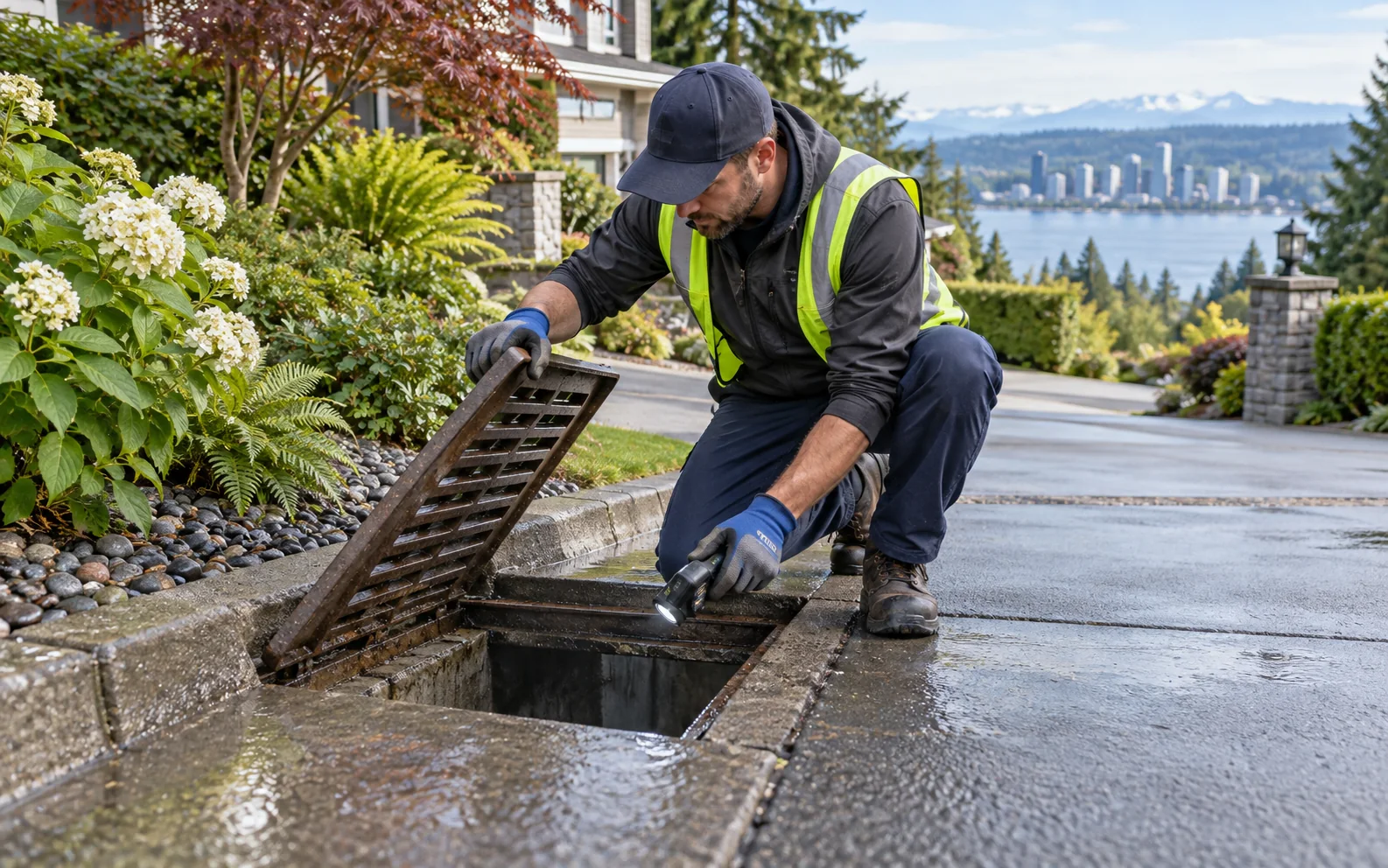
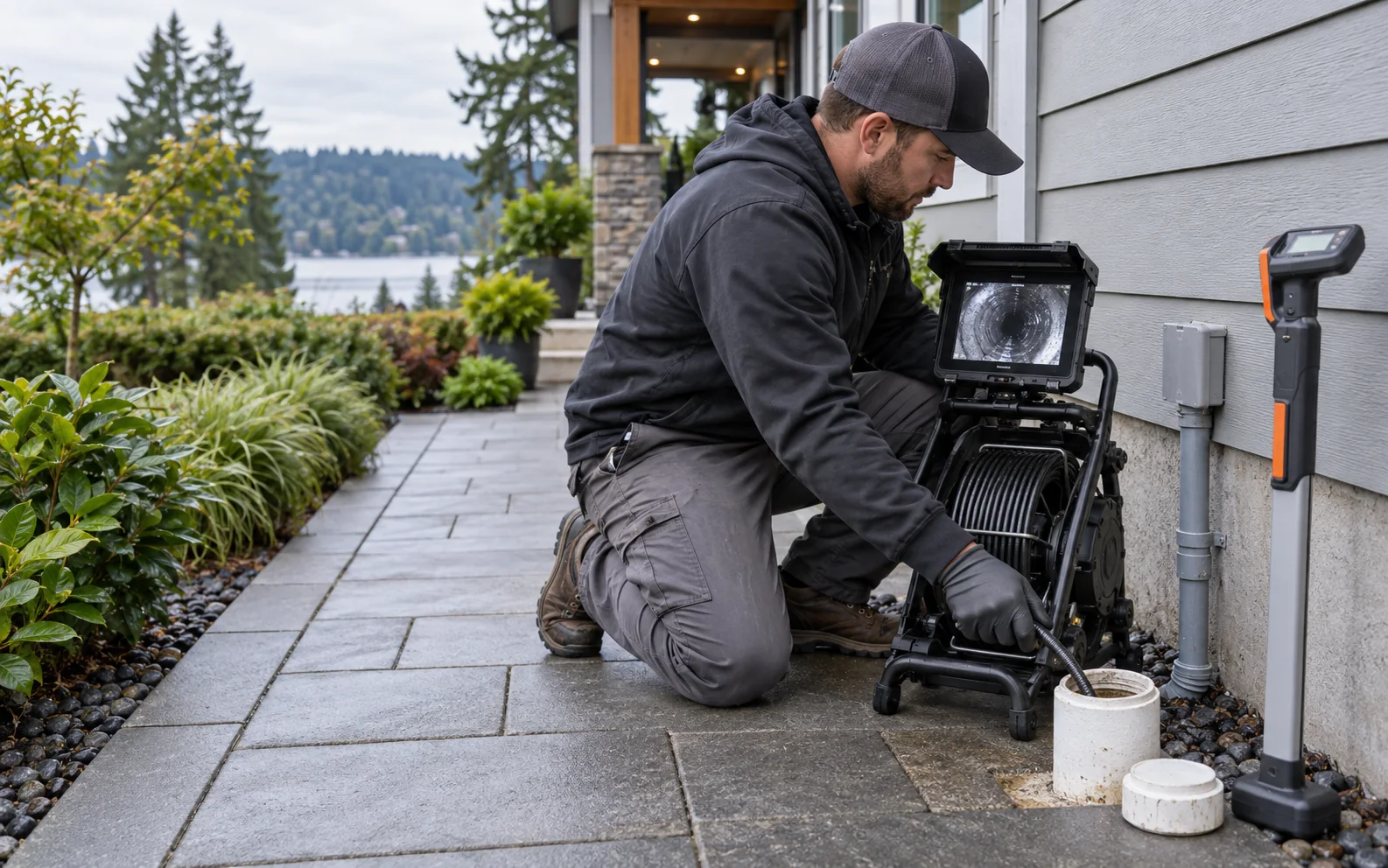
The map provides local contact context for Bellevue Rapid Drain. It does not determine boundaries, responsibility, response time, or serviceability.
Start here for private outdoor features where rainwater collects, enters slowly, backs up, or reaches an area it normally does not.
Include the feature location, weather context, property boundary, safe access, and where water is collecting.
Weather, collection point, runoff direction, grate condition, property boundary, safe access, and public-versus-private responsibility can change the service conversation.
Share the feature, rainfall timing, runoff direction, property boundary, and safe access details.
Contact Bellevue Rapid Drain