
Problems to describe
- kitchen drainage slowing near the trap or connected fixtures
- odor returning around the trap area
- service access or operating windows limiting the next step
Grease-trap questions need more than a generic clogged-drain description. Trap location, access, kitchen workflow, and maintenance context all matter.
Choose this path for restaurant or food-service grease-trap concerns, odors, slow drainage, or maintenance planning.
Describe the facility, trap location, access route, operating limits, prior cleaning pattern, and connected fixtures.
Call with the detailsFacility type, trap location, access route, connected fixtures, prior cleaning pattern, kitchen schedule, and any wastewater or odor concern can change the work discussion.
Grease-trap work sits inside a food-service workflow. Trap location, connected fixtures, cleaning history, and operating limits are central to a useful request.
Grease-trap questions are operational as well as plumbing-related. Trap location, kitchen workflow, access, and maintenance history help define the conversation.
The trap location, connected fixtures, maintenance history, and operating schedule should be confirmed together.
Share the trap location, access route, operating limits, previous cleaning pattern, and which fixtures are connected before selecting a method or schedule.
Describe the kitchen workflow and access route without assuming that odor or slow drainage proves the trap is the cause. Include previous maintenance and the preferred service window.
These paths help when a food-service issue also involves commercial drainage, a shared line, or a buildup method discussion.
Restaurant grease trap service in Bellevue should clarify whether odor and slow drainage are present, whether the request is routine restaurant grease trap maintenance, and how grease trap access and cleaning will be handled.
People may describe the need as grease trap cleaning Bellevue WA, restaurant grease trap service Bellevue, and commercial grease trap cleaning Bellevue. More specific questions include grease trap odor and slow drainage Bellevue, restaurant grease trap maintenance Bellevue, and grease trap access and cleaning Bellevue. The fixture, timing, recurrence, access, and property context should guide the request.
Call when a restaurant or food-service kitchen has slow connected drains, recurring odor near the trap, or a grease-trap access issue. Share the trap location, kitchen workflow, and timing for grease trap cleaning intent.
A professional can account for trap access, connected fixtures, operating limits, and prior maintenance before discussing grease trap cleaning. That context helps separate a trap issue from a downstream kitchen drainage restriction.
Do not enter or improvise work inside a grease trap. Keep food solids and oils out of the drainage system, isolate the affected area where possible, and preserve the maintenance history for the service conversation.
Follow the facility’s documented grease-control routine, keep the access area clear, and record odors, slowdowns, and prior cleanings. Consistent records support planned grease trap maintenance and make recurring kitchen drainage patterns easier to explain.
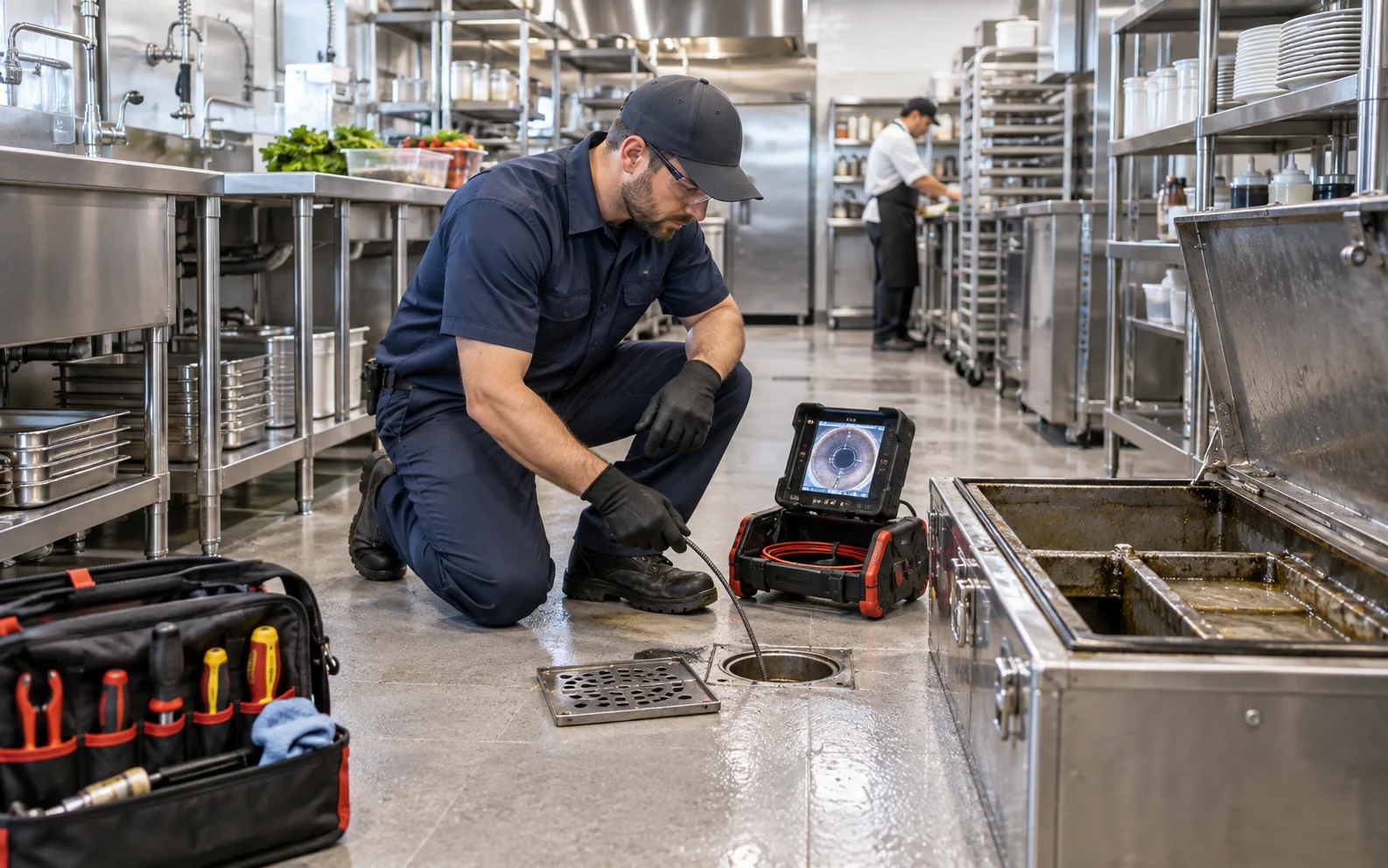
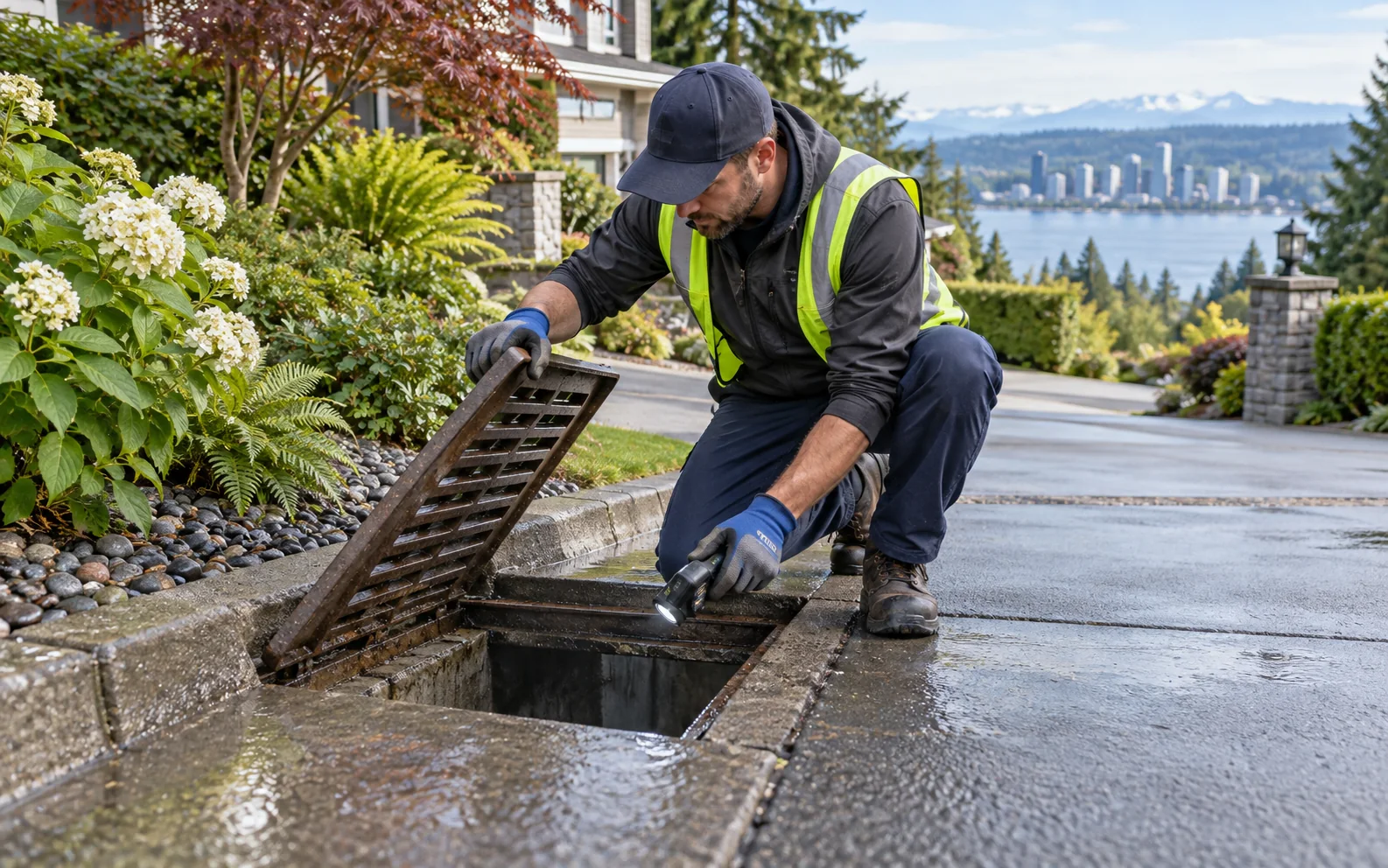
These views match the kind of fixture, line, outdoor feature, or operating context that can change the first conversation for grease trap cleaning.
The map provides local contact context for Bellevue Rapid Drain. It does not determine boundaries, responsibility, response time, or serviceability.
Start here for restaurant or food-service grease-trap concerns involving odor, slow drainage, access, or recurring maintenance questions.
Describe the facility, trap location, access route, operating limits, prior cleaning pattern, and connected fixtures.
Facility type, trap location, access route, connected fixtures, maintenance pattern, kitchen schedule, and wastewater concerns can change the work discussion.
Share the facility type, trap location, connected fixtures, maintenance history, access route, and operating limits.
Contact Bellevue Rapid Drain