
Problems to describe
- the same line restriction returning repeatedly
- several fixtures showing a connected pattern
- a previous clearing helping only temporarily
Rooter is a method question, not a diagnosis. Use the visible pattern and prior service history to decide whether this path is worth discussing.
Use this route for recurring line restrictions, suspected root intrusion, or a blockage that returns after prior work.
Share previous service history, affected fixtures, cleanout location, and any camera or line information available.
Call with the detailsLine history, suspected root intrusion, pipe condition, cleanout access, prior methods, and inspection evidence should be confirmed before a method is selected.
Rooter language is most useful when it follows a recurring pattern. The prior method, how long it helped, and any inspection information should stay visible.
Rooter is a method conversation, not a diagnosis. Recurring restrictions and prior clearing history help determine whether it is worth discussing.
The line history and available evidence should guide a rooter discussion; the method name alone does not establish the cause.
Bring the history of what was tried, how long it helped, and which fixtures are affected. Do not treat the word rooter as proof of the cause.
Gather earlier invoices, notes, camera information, or the location of the cleanout if available. A repeated restriction needs history, not only the latest symptom.
These paths help compare a general line-cleaning question with a different method discussion or commercial operating need.
Rooter drain service in Bellevue is a method question: tree roots in a sewer line, a recurring sewer clog, or a main-line rooter request should be confirmed against the actual pipe and access context.
People may describe the need as rooter drain services Bellevue WA, drain rooter service Bellevue, and root removal drain service Bellevue. More specific questions include tree roots in sewer line Bellevue, recurring sewer clog rooter Bellevue, and rooter service for main line Bellevue. The fixture, timing, recurrence, access, and property context should guide the request.
Call when a line restriction returns after clearing, several fixtures share a recurring pattern, or roots and heavy buildup are part of the property history. Describe the symptom first so rooter service is considered as a method, not assumed as the diagnosis.
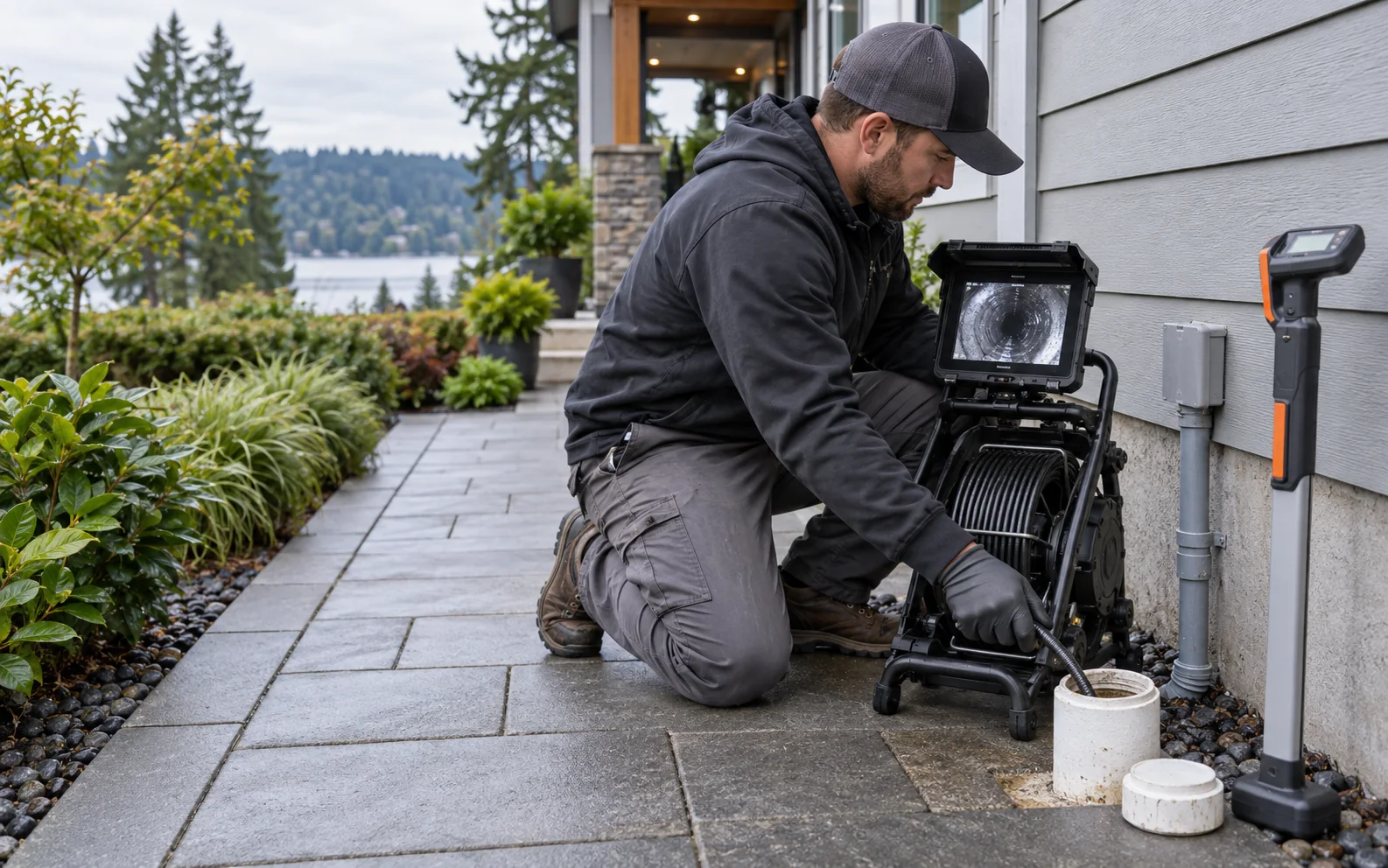
A professional can review previous drain work, cleanout access, and any camera information before discussing rooter drain service. That context helps match the mechanical approach to the location and condition of the restriction.
Avoid inserting improvised tools or using repeated chemical treatments in a line with a recurring issue. Reduce water use if the blockage is active and preserve previous service notes for the rooter service conversation.
Keep records of when a line was cleared, which fixtures were affected, and how long improvement lasted. Recurrence is useful context for rooter drain services, suspected root intrusion, and deciding whether inspection should be discussed.
These views match the kind of fixture, line, outdoor feature, or operating context that can change the first conversation for rooter drain services.

The map provides local contact context for Bellevue Rapid Drain. It does not determine boundaries, responsibility, response time, or serviceability.
Start here when a line restriction returns repeatedly, several fixtures connect to the same pattern, or earlier clearing helped only temporarily.
Share previous service history, affected fixtures, cleanout location, and any camera or line information available.
Recurrence interval, suspected roots, pipe condition, cleanout access, prior methods, and inspection evidence should be confirmed before selecting a rooter approach.
Share the recurrence interval, previous method, affected fixtures, cleanout location, and any inspection information.
Contact Bellevue Rapid Drain