Problems to describe
- a basin filling quickly or accepting less runoff
- sediment or leaves covering the grate
- standing water remaining after nearby flow should have moved on
A catch basin holds sediment and debris by design, but a blocked inlet or full basin can change how water moves across a property.
Choose this route when a private catch basin, grate, or collection point needs inspection or cleaning context.
Name the basin or inlet, explain the drainage area, note the property boundary, and describe safe access.
Call with the detailsBasin depth, grate access, sediment level, upstream runoff, weather, property boundary, and whether the feature is private can change the service discussion.
A catch basin is designed to collect sediment, so the useful question is how the grate, basin, and upstream drainage area are behaving together.
A catch basin is intended to collect sediment and debris, but a covered grate or full basin can change how runoff moves across a property. The collection point needs to be identified precisely.
A catch basin request needs the collection point, upstream flow, debris condition, and safe access details.
Name the basin or inlet, describe what drains toward it, and explain when standing water remains. Avoid assuming that every street or public inlet belongs to the property.
Identify the basin or inlet and describe what drains toward it. Note leaves, sediment, standing water, and whether the feature is accessible without entering a confined space.
These paths help compare a collection-point question with a broader stormwater feature, low indoor drain, or commercial site issue.
Catch basin drain cleaning in Bellevue should identify whether the basin is full of sediment, holding standing water, or has a blocked catch basin grate, while responsibility for the feature is confirmed.
People may describe the need as catch basin cleaning Bellevue WA, catch basin drain cleaning Bellevue, and stormwater basin cleaning Bellevue. More specific questions include catch basin full of sediment Bellevue, catch basin standing water Bellevue, and blocked catch basin grate Bellevue. The fixture, timing, recurrence, access, and property context should guide the request.
Call when a catch basin fills quickly, the grate is covered with sediment or leaves, or standing water remains after nearby runoff should have moved. Include the basin location and drainage area for catch basin cleaning intent.
A professional can distinguish a full sump, blocked grate, restricted outlet, and private catch basin connection before discussing cleaning. Access and the basin’s place in the property drainage system affect the practical next step.
Do not climb into a catch basin or reach into unknown water. Clear loose material from the surface only when safe, and record the grate condition, recent weather, and whether the water level changes.
Inspect grates before the wet season, keep leaves and soil from covering the inlet, and note how quickly sediment returns. A simple record helps identify when catch basin cleaning is needed and when the outlet needs closer inspection.
These views match the kind of fixture, line, outdoor feature, or operating context that can change the first conversation for catch basin cleaning.
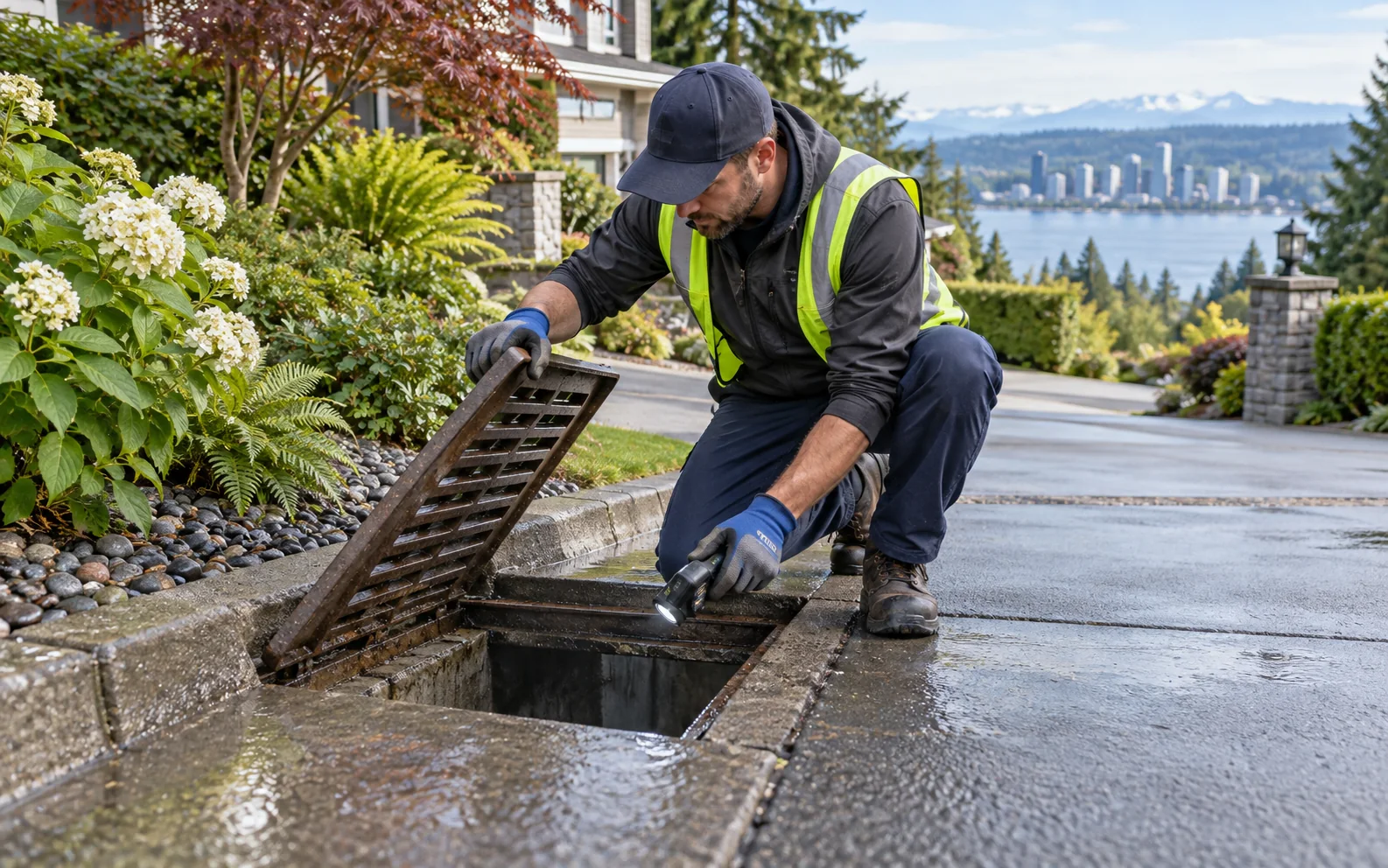
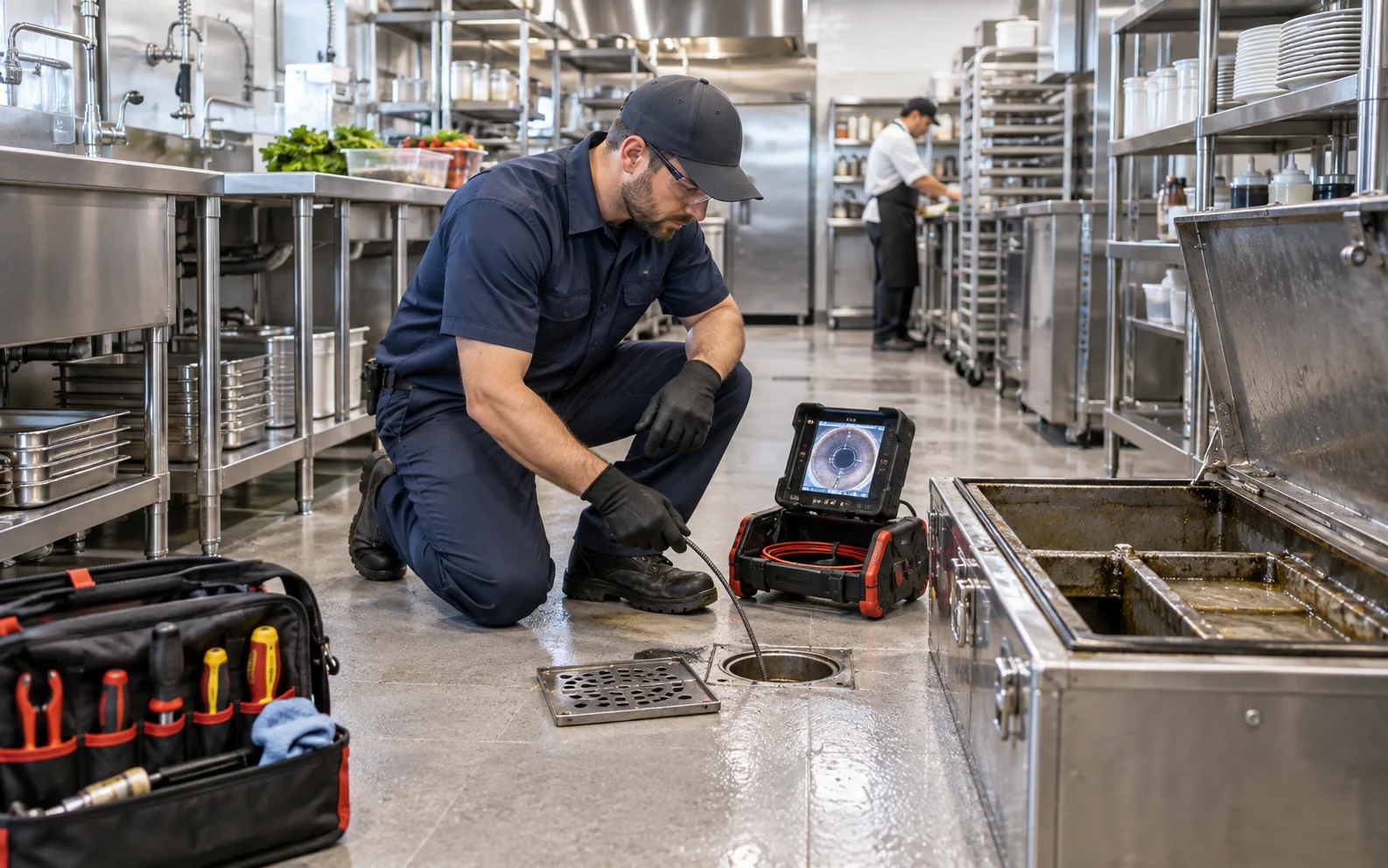
The map provides local contact context for Bellevue Rapid Drain. It does not determine boundaries, responsibility, response time, or serviceability.
Start here when a private catch basin, grate, or collection point accepts less runoff, fills quickly, or leaves standing water.
Name the basin or inlet, explain the drainage area, note the property boundary, and describe safe access.
Basin depth, grate access, sediment level, upstream runoff, weather, property boundary, and safe access can change the work discussion.
Name the basin, describe the grate and sediment, explain the upstream drainage area, and include access information.
Contact Bellevue Rapid Drain